
RO Membrane Replacement
Match and replace 4040 or 8040 RO membrane elements using model, vessel array, feed conditions, normalized performance, cleaning history and startup data.
When this solution is appropriate.
This route is for matching and replacing RO membrane elements in existing commercial and industrial systems. A shared 4040 or 8040 size does not make two membrane models hydraulically or chemically equivalent.
- Compare normalized permeate flow, salt rejection and pressure drop before deciding that replacement is required.
- Match membrane chemistry, nominal flow, rejection, pressure rating and feed spacer to the complete pressure-vessel train.
- Investigate pretreatment or operating faults before loading new elements so the same failure is not repeated.
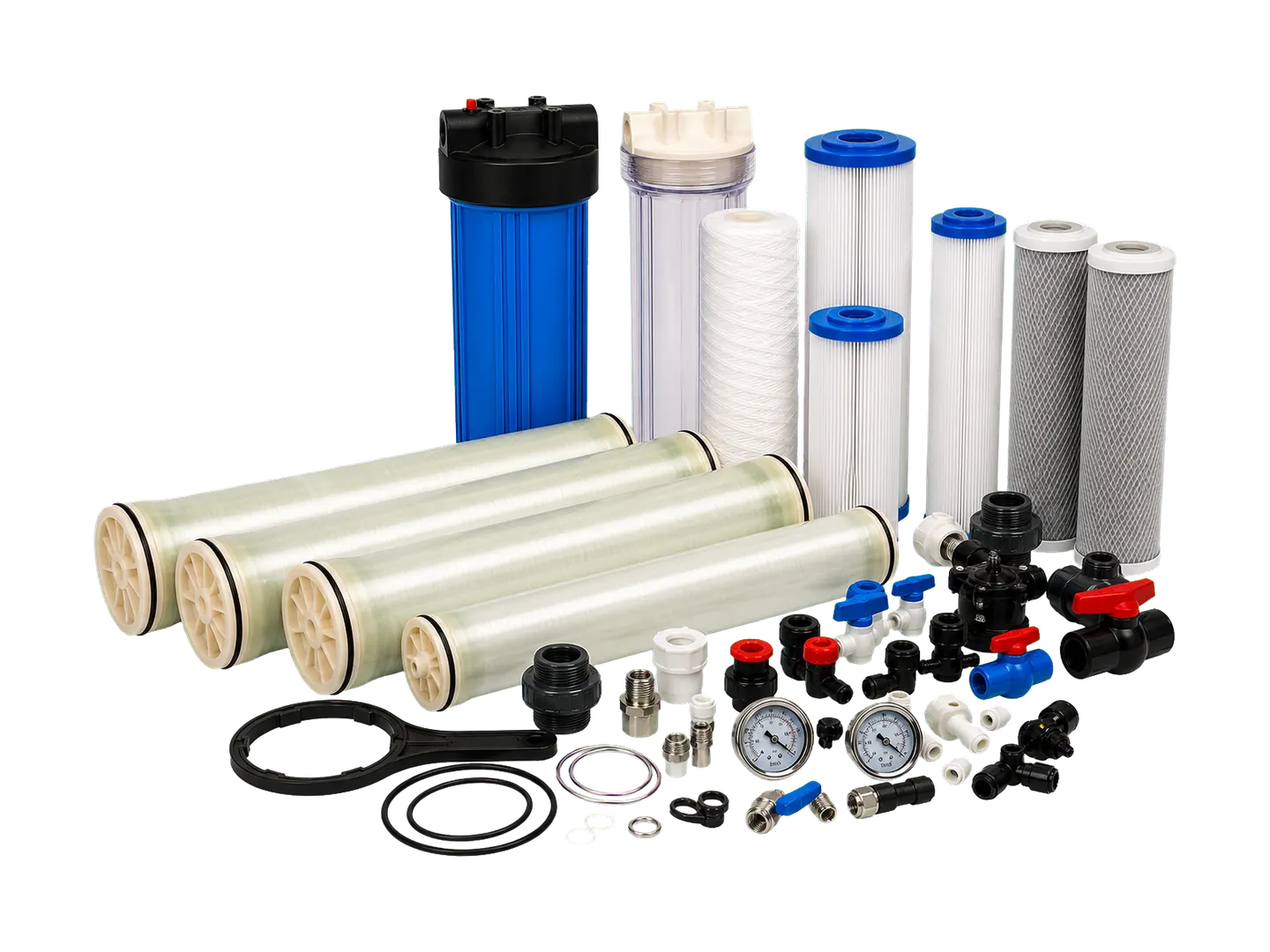
Data that controls the final configuration.
These inputs determine pretreatment, process stages, equipment size, storage and control scope before a technical quotation is confirmed.
- Element identification
- Send the full brand and model label plus clear photos of the element and vessel.
- Physical arrangement
- Confirm 4040 or 8040 format, vessels per stage and elements per vessel.
- Feed conditions
- Provide TDS, temperature, pressure, recovery, chlorine control and pretreatment details.
- Performance history
- Share normalized permeate flow, salt rejection, pressure drop and trend dates.
- Cleaning history
- List cleaning dates, chemicals, pH, temperature and recovery after cleaning.
- Replacement scope
- Confirm element quantity, seals, interconnectors, preservation and destination.
Recommended treatment sequence.
Optional stages are included only when the feed analysis, operating profile or final water requirement supports them.
- Baseline reviewConfirm whether performance loss is normalized and whether pretreatment is stable.
- Model matchingCheck size, chemistry, flow, rejection, pressure and spacer compatibility.
- Shutdown and unloadingIsolate, drain and remove elements according to vessel and site procedures.
- Inspection and loadingInspect vessels, replace approved seals and load elements in the correct direction.
- Low-pressure flushingRemove preservative and air before introducing normal operating pressure.
- Controlled startupIncrease pressure and recovery gradually while checking leaks and quality.
- Normalized baselineRecord stabilized flow, rejection and pressure drop for future comparison.
Engineering values to confirm during selection.
These are design references, not unconditional guarantees. Final values depend on the supplied water analysis, equipment selection and operating conditions.
| Parameter | Reference | Design note |
|---|---|---|
| Element format | 4040 or 8040 | Confirm vessel diameter, nominal length and adapter arrangement. |
| Vessel array | Project-specific | Provide stages, vessels per stage and elements per vessel. |
| Feed TDS and temperature | Current operating data | Required for normalized performance and model selection. |
| Operating pressure | Current and design values | Confirms compatibility with the pump and membrane model. |
| Permeate flow | Normalized trend preferred | Raw flow alone can misrepresent seasonal temperature effects. |
| Salt rejection | Normalized trend preferred | Falling rejection may indicate damage, leakage or seal problems. |
| Pressure drop | Per vessel and stage | High differential pressure can indicate fouling or telescoping risk. |
| Cleaning history | Dates and chemistry required | Used to judge irreversible fouling and replacement timing. |
Core equipment and controls.
- Membrane-model and vessel-arrangement review from supplied records
- 4040 or 8040 RO membrane elements in the confirmed quantity
- Approved interconnectors and brine seals when included
- Preservation and sealed transport packaging
- Loading direction, flushing and baseline-recording guidance
Items selected from project data.
- Equivalent-model engineering review
- Complete train replacement instead of mixed old and new elements
- Replacement seals and interconnectors
- Startup checklist and remote commissioning review
Commissioning and maintenance priorities.
- Store sealed elements within the membrane supplier's temperature and preservation limits.
- Do not allow chlorine exposure or dry-out during unloading, loading and startup.
- Flush at low pressure until preservative and abnormal conductivity are cleared before collecting product water.
- Record stabilized operating data under known temperature and recovery conditions as the new baseline.
Questions before equipment selection.
What information is needed to match replacement RO membranes?
Send the full model labels, 4040 or 8040 format, vessel array, feed and operating data, performance trends, cleaning history and required quantity.
Can any 8040 element replace another 8040 element?
No. Physical size can match while membrane chemistry, flow, rejection, pressure rating and feed-spacer design differ.
What should be recorded after new membranes start?
After flushing and stabilization, record temperature, feed and stage pressures, flows, recovery, permeate conductivity, salt rejection and pressure drop.
Compare the product routes for this solution.
Turn the application data into a quotation.
Send membrane labels, vessel photos and array, element count, feed TDS, temperature, pressure, recovery, normalized flow and rejection, pressure drop, cleaning history and quantity.